
Friendship Peak Trek
- Home
- Friendship Peak Trek

Mt. Friendship Peak (Max Altitude 5289 mts )
Best peak for beginner mountaineers.
Mt. Friendship Peak
Grade 6Description
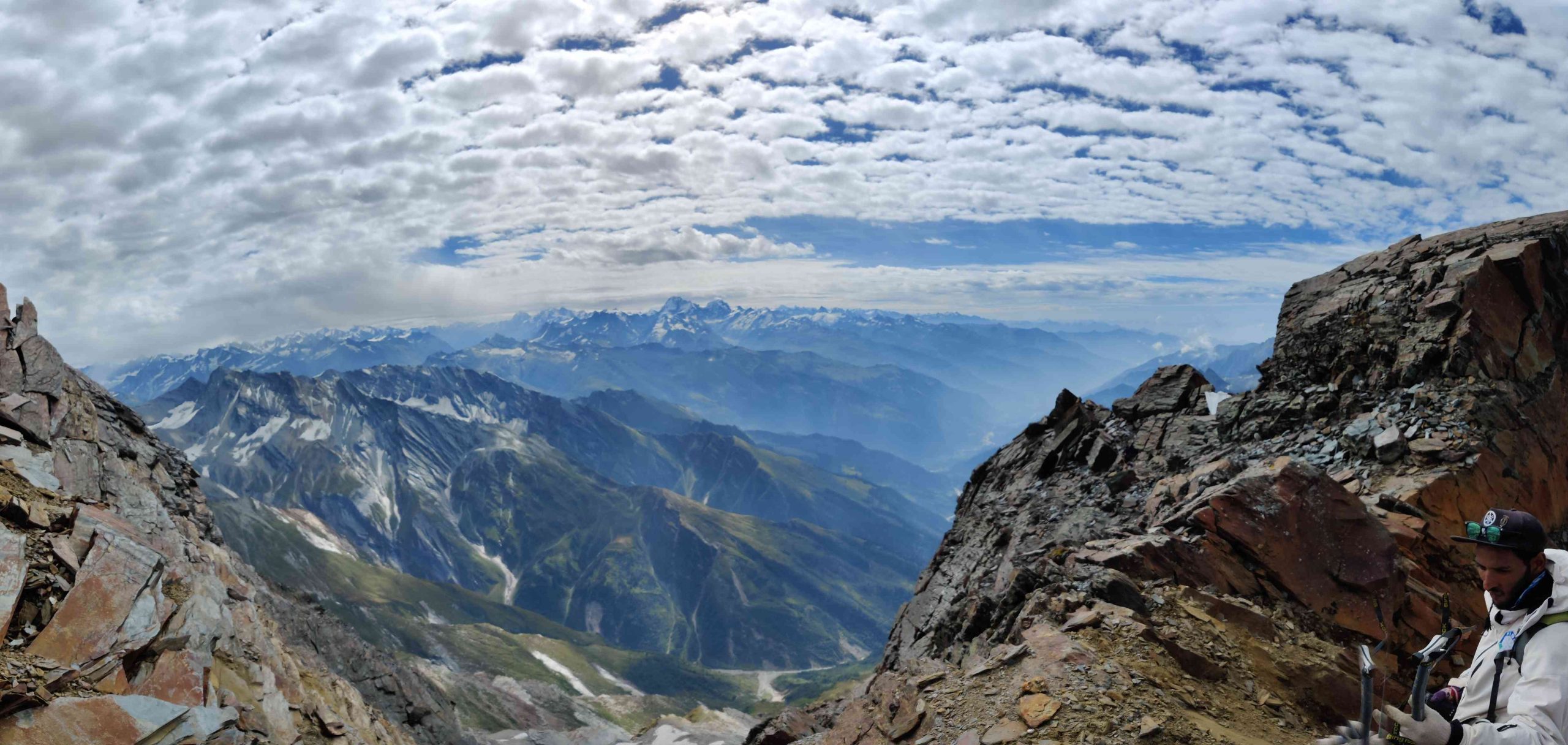
Friendship Peak is often considered a natural stepping stone into the world of serious mountaineering. Positioned strategically between two legendary Himalayan ranges—the Pir Panjal and the Dhauladhar—it offers a panoramic stage for some of the tallest and most iconic mountains of both regions. From its col, you get an aerial view of Manali, and from its summit, sweeping vistas of the remote Lahaul mountains. Facing the formidable Hanuman Tibba and surrounded by giants like Indrasan, Deo Tibba, Priyadarshani, and the Seven Sisters, Friendship Peak stands proudly in elite company.
Rising to 5,289 meters, the peak belongs to the Pir Panjal range, the largest subset of the Lesser Himalayas. Despite being modest in height compared to nearby 6000ers, the journey to the top is breathtaking in every sense. The trail is a visual feast—lush forests, expansive meadows, sprawling clearings, icy stream crossings, and a shimmering spread of untouched snow, all within a 34 km trail. The campsites burst with alpine flora and wildlife, making every halt a small adventure of its own. Even under a deep carpet of snow, the landscape remains captivating and full of character.
As you move through glaciers, negotiate snowfields, battle unpredictable weather, and climb relentless gradients, the trek transforms into a full-fledged adventure. Although categorized as a “trekking peak’’ by the IMF, Friendship Peak should never be mistaken for an easy climb. Its tricky terrain, fluctuating temperatures, and steep slopes demand both endurance and mountaineering awareness. It’s ideal for trekkers wanting to transition towards technical climbing—where the peak’s moderate altitude provides the perfect learning ground without compromising on challenge.
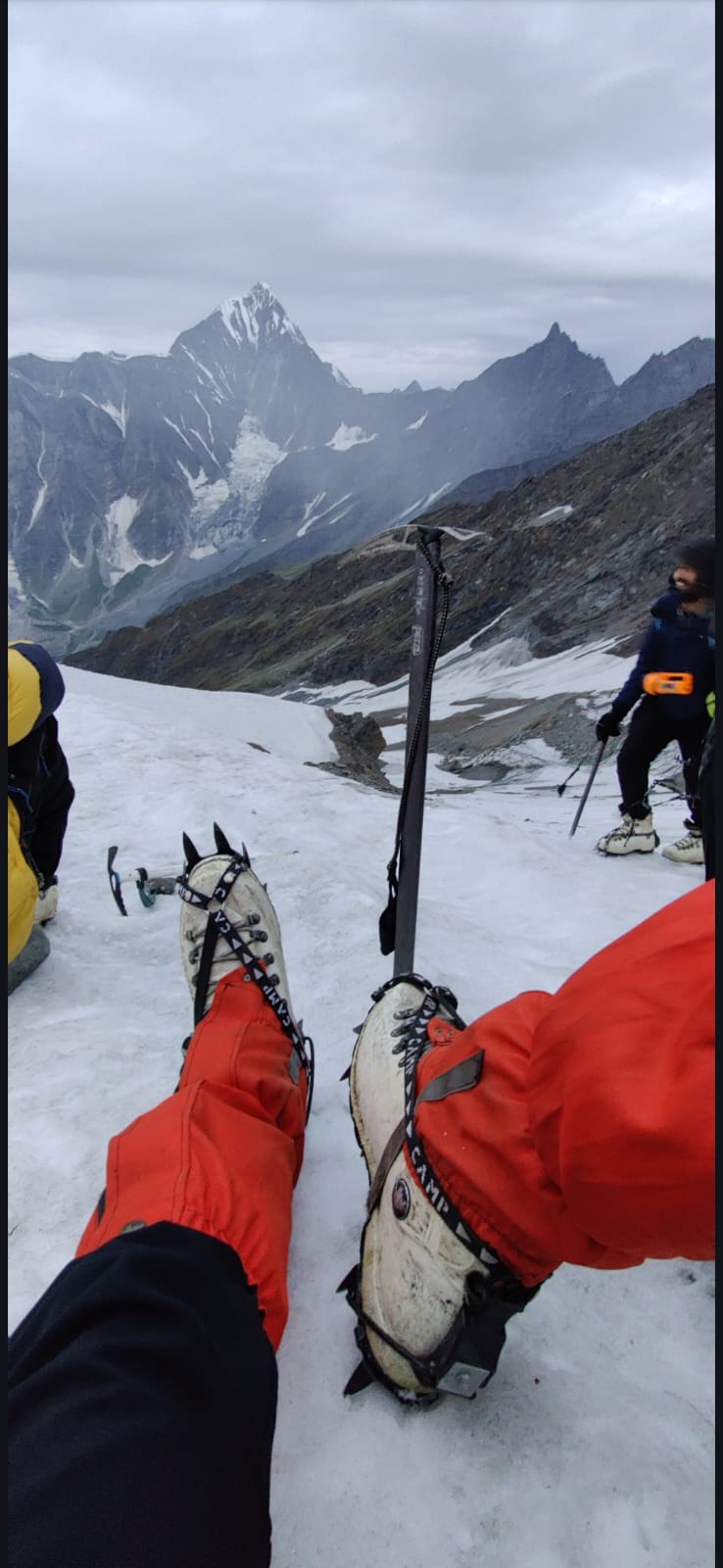
This climb also requires practical mountain skills: using an ice axe, walking safely on steep snow, roping up, pitching shelters in snow, and coordinating as a team. With fast-changing weather—snowstorms, whiteouts, or sudden rain—the ascent stays thrilling and demanding right to the summit.
The peak offers two very distinct experiences depending on the season:
May–June: Heavy snow, classic mountaineering terrain
September–October: Mostly rocky surfaces with patches of snow
Both windows offer their own beauty, challenges, and memorable moments for those prepared to take them on.
Brief Itinerary
Day 1: Make your way to Manali (2,050 M)
Day 2: Manali (2,050 M) to Dhundi (3,150 M) via Solang Nalla and onward to Lohali (3,300 M)
Day 3: Lohali (3,300 M) to Advance Base Camp at Lady Leg (3,840 M)
Day 4: Load Ferry to Summit Camp (4,000 – 4,200 M)
Day 5: Onwards to Summit Camp (4,000 – 4,200 M)
Day 6: Summit Day (5,289 M)
Day 7: Reserved as a Reserve Day!
Day 8: Back to Where We Started!
Brief Itinerary
Day 1: Reach Manali (2,050 m)
The trek begins from Manali, a popular and easily accessible mountain town. Participants arrive in Manali and check into their accommodation.
The day is kept relaxed to help everyone adjust to the mountain environment. We meet as a group to discuss the plan for the coming days, safety guidelines, mountain ethics, and environmental responsibility. Since this is a learning-based trek, there is also a practical session on how to pack backpacks efficiently for a successful climb. Equipment checks and permit formalities are completed today. Though easy, this day is crucial for the journey ahead.
Day 2: Manali to Dhundi – Trek to Lohali (3,300 m)
Distance: 21 km drive + 4.5 km trek
Duration: 1-hour drive + 3-hour trek
After breakfast, we drive to Dhundi via Solang Nallah, the starting point of the trek. The scenic drive offers views of Solang Valley and, on clear days, paragliders floating across the sky.
The trek from Dhundi to Lohali begins by early afternoon. It is a gradual climb through forests, boulder sections, and open patches. Along the way, we enjoy views of surrounding peaks like the Seven Sisters. After a short rest midway, we continue climbing through dense forest trails before reaching Lohali meadow by evening.
At the campsite, we learn how to pitch tents and set up camp. Later, we go for a short acclimatization walk to higher ground and return to the campsite for the night.
Day 3: Lohali to Advance Base Camp – Lady Leg (3,840 m)
Distance: 4 km
Duration: 3–3.5 hours
We start early after breakfast and pack up our campsite. The trail today is steeper and more demanding than the previous day. The climb takes us through open alpine meadows filled with wildflowers and offers stunning mountain views.
After a continuous ascent, we reach Advance Base Camp, known as Lady Leg due to its shape. By lunchtime, we settle into camp. If weather permits, we begin basic snow and ice training using mountaineering equipment.
This campsite offers spectacular views of the Pir Panjal and Dhauladhar ranges and our first clear view of Friendship Peak.
Day 4: Load Ferry to Summit Camp (4,000–4,200 m)
Distance: 3 km
Duration: 2–3 hours
After breakfast, we begin a load-carrying hike towards Summit Camp. The terrain becomes steeper, snow-covered, and slippery. Walking in snow boots takes some adjustment, but it gets easier with practice.
Once we reach the campsite, we set up a tent and leave equipment there. This helps with acclimatization and reduces load for summit day. If conditions allow, we conduct further snow and technical training. Following the principle of “climb high, sleep low,” we return to Lady Leg for the night.
Day 5: Move to Summit Camp (4,000–4,200 m)
Distance: 3 km
Duration: 2.5 hours
After a late breakfast and rest, we move up to Summit Camp carrying only essential gear needed for the summit push. Since the route is familiar, the climb feels easier.
The afternoon is spent resting and sleeping, preparing for the summit attempt later in the night. If weather conditions are unfavorable, the summit push may begin directly from Lady Leg.
Day 6: Summit Day – Friendship Peak (5,289 m)
Distance: 14–16 km
Duration: 12–14 hours
We begin the summit push between 1 and 2 AM. This is the most challenging and rewarding day of the trek. After an initial gradual walk on snow, the climb becomes steep and technical with ice, rocks, and exposed sections.
Using crampons and ice axes, we navigate steep slopes and rocky terrain. We aim to reach the col by sunrise to witness breathtaking views of Manali and the Pir Panjal range.
From the col, we continue along narrow ridges to the summit, reaching it by late morning. After spending some time at the top, we descend carefully as the snow softens during the day.
We return to Summit Camp by early afternoon, pack up, and descend to Lady Leg to rest overnight.
Day 7: Reserve Day
This day is kept as a buffer in case of bad weather or if a second summit attempt is required.
Day 8: Return to Manali
Distance: 8–9 km trek + 21 km drive
Duration: 4-hour trek + 1-hour drive
We descend from Lady Leg to Dhundi and drive back to Manali, reaching by early evening. Participants are advised to book late-night onward travel to account for possible delays.
The trek concludes with a celebration of the successful climb and unforgettable memories from the mountains.
Other Treks
Gallery




What's Included
- Food as per menu on the trek (Starting lunch on Day 2 till lunch on the last day in Manali)
- Forest Permits/Camping Charges,if any (Upto the amount charged for Indian nationals)
- Tents on twin sharing basis, Sleeping bags, mats
- Safety Equipment includes static rescue rope, seat harness, carabiners, pulleys & other items used for climbing.
- First Aid certified Expedition guide, cook, helpers, and porters for carrying common supplies
- Mountaineering course certified Trek Leader with First Aid certification and special rescue course from NIM, Uttarkashi
- Hotel/Guest House stay in Manali on Day 1. Rooms will be on Twin/Triple Sharing Basis. In case, reserve day is used, the trek will end in Manali.
What's Not Included
- Portage of personal bags during the trek
- Cost of any kind of Travel Insurance.
- Any Expense of personal nature.
- Any Expense not specified in the inclusions list.
- In case reserve day for summit attempt is utilized, an additional amount of INR 2500 would be charged.
- IMF Fees for Foreign Nationals (approximately USD 75 per person)
- Hotel Stay in Manali on last day of the trek
Frequently Asked Questions
Friendship Peak lies in the Pir Panjal Range of the Himachal Himalayas, near Manali, in the Kullu district of Himachal Pradesh.
The peak stands at 5,289 meters (17,350 ft) above sea level.
Yes. Although categorized as a trekking peak by the IMF, the climb involves steep snow slopes, glacial terrain, and basic mountaineering techniques. It is not a beginner-friendly trek.
Friendship Peak is ideal for:
Experienced trekkers
Climbers wanting to transition from trekking to mountaineering
Individuals with prior high-altitude experience (4,000 m+)
Those familiar with basic mountain skills (ice-axe use, crampons, roping up)
Yes. You must have basic knowledge of:
Using crampons and ice axe
Snow-walking techniques
Rope systems
Self-arrest skills
Training is also provided during the expedition, but prior experience helps greatly. for more info Kailasa Treks.
Book a Tour
Error: Contact form not found.