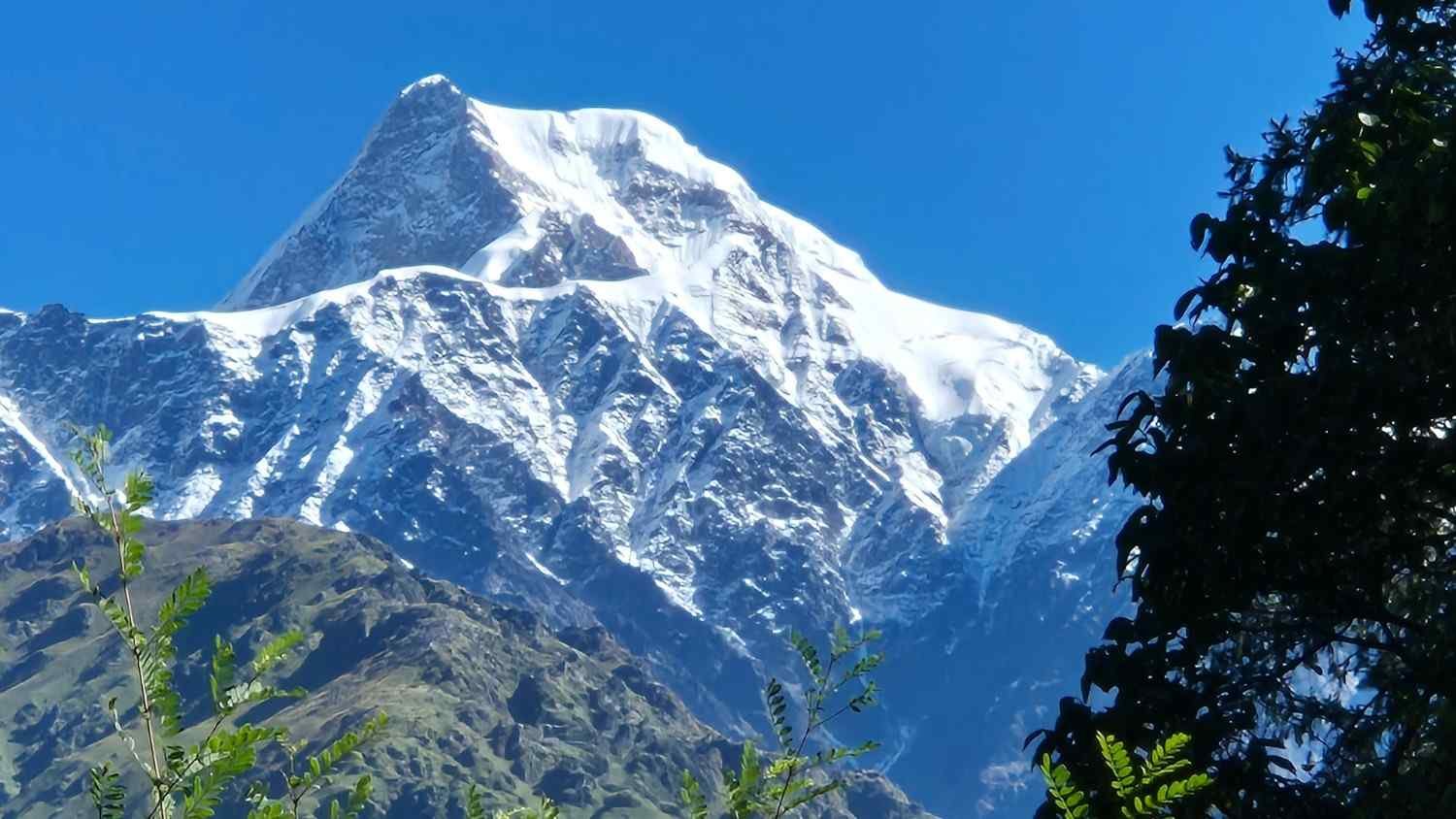
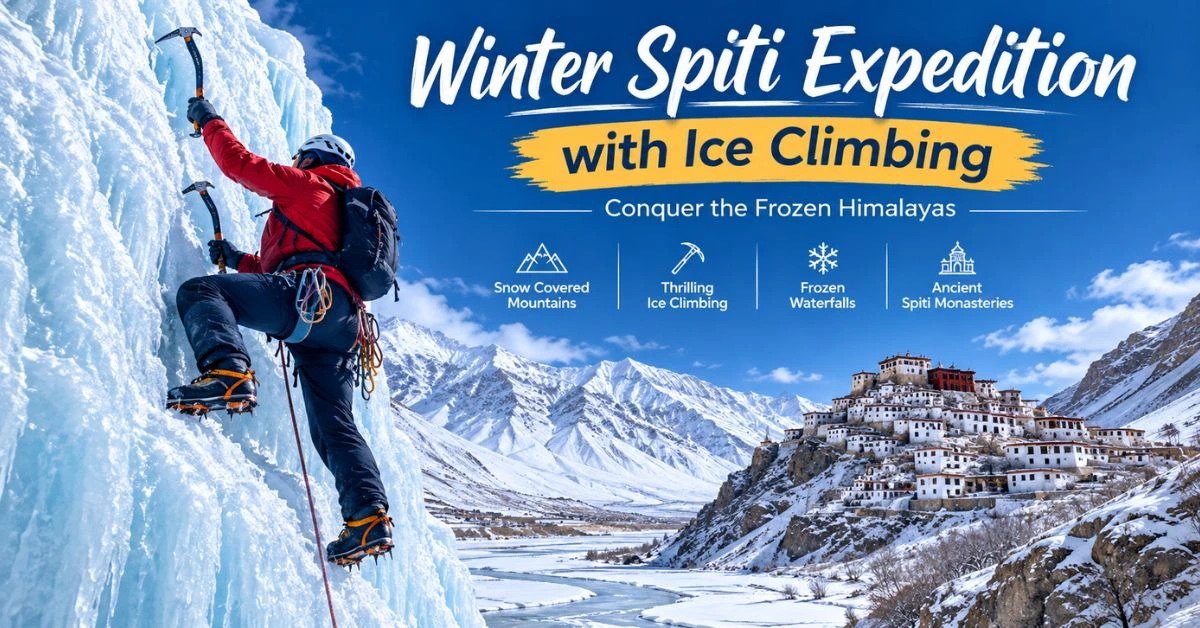
Picture this: you are in a Himalayan village, snow-capped mountains, silent roads, stretches of the river frozen over, and no hordes of summer tourists to be seen. Now, add ice climbing to the mix – climbing proper on crampons, ice axes, ropes, and other mountaineering gear. Such is the winter Spiti expedition, a most unique experience of seeing one of the most isolated regions of Himachal Pradesh.
Spiti Valley is a cold desert, a high-altitude area of Himachal Pradesh inhabited by brave souls who call the mountains their home. This region possesses a unique charm in winter, when the mountains are covered in snow, the streams are turned to ice, and the locals speak of weather conditions as something they cannot control. December to February is officially the winter season in Himachal Pradesh, and Himachal Pradesh Tourism Board has declared Lahaul-Spiti as a cold winter destination.
Yet, for an adventurer at heart, the region has much more to offer. It appears that frozen waterfalls and natural ice formations are the perfect climbing aids for a most challenging and thrilling icy activity. In fact, current spiti ice climbing programs offer an introduction to climbing on ice, including top rope climbing and other climbing techniques.
This article will guide you through your winter spiti expedition with climbing and give you an insight into such an adventure, from the conditions and experiences to the equipment, fitness, travel, and tour planning. If you want to have a more exciting trip than a regular road trip, take a look at winter spiti expeditions; perhaps, some day, it will become your unique adventure.
Why Is Spiti in Winter So Special?
Spiti in winters has an entirely different character than the one familiar to most travellers who visit the region during summer. The valley becomes more stark, desolate, severe and beautiful, as winter sports in Himachal Pradesh snows blanket the landscape. While Himachal Tourism Department calls Lahaul-Spiti a remote Himalayan region with spectacular valleys and peaks, their note on winter sports in Himachal Pradesh indicates that the region sees heavy snowfall in winter.
The most immediate difference is that of accessibility. Spiti Valley in winter is much more challenging to access than during other seasons. As a result, the number of tourists who visit Spiti Valley in winter is limited to those willing to contend with the challenges of a high altitude Himalayan wilderness during the cold months. Some of the roads and regions become inaccessible depending on the severity of the winter and snowfall.
A significant part of the charm of a trip to Spiti Valley during the winter is discovering the familiar in the unfamiliar. The same monasteries are still standing, but they are surrounded by white stretches of snow. The same villages are still there, but their harshness is amplified by the cold and the snow. Even getting there becomes an adventure, as the journey is dictated by road conditions and the whims of the weather.
It makes a winter sojourn in the Spiti Valley especially appealing to photographers, mountaineers, and adventure enthusiasts looking to experience a region in its most raw and inaccessible form. Because a trip to Spiti Valley in the winter is less about sightseeing and more about getting there.
What Is a Winter Spiti Expedition?
A winter Spiti expedition is a form of adventure tourism focused primarily on exploring the Spiti Valley region during the cold season. Depending on the organizers, this tour can include road trips, acclimatization, local discovery, hiking and winter sports, and even special events like ice climbing.
It is noteworthy that the term “expedition” refers primarily to the complexity of traveling through the mountains during winter. In other words, the experience is much more involved than a regular road trip, as snow-covered roads and freezing temperatures at night can make this journey challenging. As such, a responsible travel operator should offer expedited services such as expertly driven cars, appropriate equipment, extra provisions, and flexible itineraries.
In addition, a competent agency will provide a viable alternative if bad weather conditions prevent the group from reaching specific sites or climbing certain peaks. After all, the ability to change the plans is one of the most important aspects of any expedition. It goes without saying that a winter Spiti tour is only one of the many services offered by Kailasa Treks, as the company specializes in mountain climbing, trekking, and snow training.
Winter Spiti vs. a Regular Spiti Tour
A classic Spiti tour is all about sightseeing, road, visiting monasteries and villages, and taking in the scenery. A Spiti tour in the winter offers an additional challenge and insight into the region through the elements, altitude, and activities unique to the area.
It is easy to tell a difference in the itineraries that include such adventure sports. With time spent away from the road and in vehicles, the winter months allow tourists to get up-close and learn the art of glacier climbing. Ice climbing, therefore, adds a whole new dimension, making the tour both an adventurous and an educational event for the tourists.
The other difference is the mental preparedness for the trip. The winters demand for more cautious planning due to overnight stays in extremely cold weather, less availability of water, slow moving roads, and even alternate itineraries. The reward, however, is a much more authentic and isolated insight into the region than you would have experienced otherwise.
Why Winter Makes the Journey More Adventurous?
Winter makes the local Himalayan landscape an unfamiliar one. Roads, trails and rocks are covered with snow and cold enough to produce unique ice formations unseen during the summer.
This is why winter Spiti packages must not be chosen on a budget, for the reliability of the vehicle, driver, guide, safety equipment, accommodation, contingency planning and flexibility of the itineray can often outweigh the value of the package.
To experience a winter adventure in a remote mountain valley, good logistics form an integral part of the expedition.
Ice Climbing in Spiti Valley
Ice climbing in the Spiti Valley is the unique experience that will turn your winter road trip into a real adventure. Instead of taking photos of the frozen waterfalls, you will learn how to safely interact with the ice using special tools and ropes.
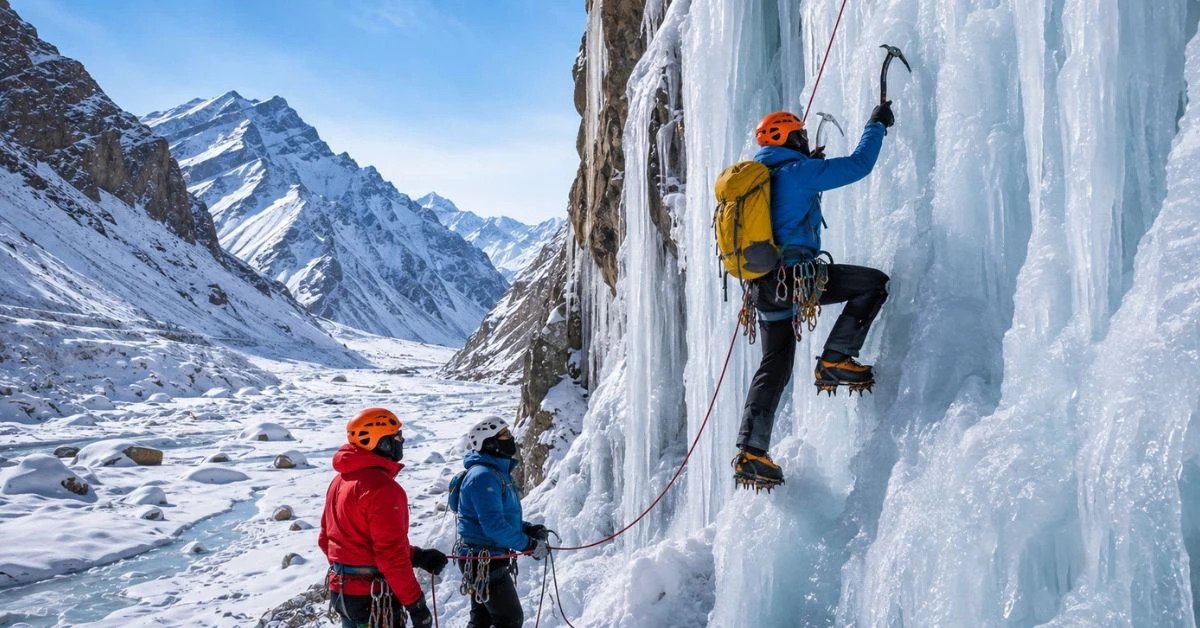
Spiti’s current ice climbing packages offer introductory courses on climbing on the frozen waterfalls, and include the training of individual skills, such as leading and top roping and climbing. The six-day Spiti program, for example, includes the introduction to climbing on the frozen waterfall with a maximum height of 4400 m.
The place and height of climbing are not fixed, as they depend on the current weather conditions and the state of the ice. The natural formations are never consistent, as they are subject to constant pressure from the environment and vary significantly in terms of quality and quantity from season to season. It is why people who want to climb must always rely on the professionals who can assess the situation as required by the local conditions.
What Is Ice Climbing?
Ice climbing refers to climbing activities on natural formations of ice requiring special equipment such as crampons, axes, rope, and other tools designed specifically for such conditions. Unlike rock climbing, the surface to be climbed may well change due to temperature variations and weather conditions.
The first goal for an amateur climber should not be the top of a magnificent ice formation but learning how to use the necessary equipment. A good ice climbing course will introduce participants to the basics of climbing, including the proper placement of feet and ice axes, balancing, mastering ropes, and other techniques while under the guidance of a specialist. Moreover, the latter can advise climbers and give recommendations on more advanced techniques so that they can try their skills on more complex formations. All this, of course, should be done with due consideration of the climber’s capabilities, current conditions, and the composition of the team.
Why Spiti Is a Great Place for Winter Ice Climbing?
Spiti’s winter climate provides the perfect conditions for creating the ice-climbing environment. It is the high altitude, freezing temperatures, and icy conditions that form spectacular icefalls for adventurous climbing.
But the uniqueness of Spiti is not only in the ice climbing itself, but also in the place where it is held. The ice climbing school will introduce you to climbing not behind a glass wall in an indoor gym, but on the rocks in the heart of the Himalayas, where there is a white world around – peaks, snowfields, and high-altitude villages.
Spiti is a pristine plateau, and the sense of wilderness is overwhelming, but this does not mean that you can take your time exploring on your own. You will notice beautiful spots to set up your own camp, however, the ice climbing school will have to choose the safest and most reliable routes.
Can Beginners Join an Ice Climbing Course?
Beginners should be able to join the introductory ice climbing experiences if the program is designed for them and instructors are ready to train novices. Spiti programs welcome beginners as they offer introductory frozen water climbing with basic technical instruction.
Nevertheless, a novice-friendly program implies that it may be challenging for someone without experience. Ice climbing requires special gear, and exposure to cold temperatures and dynamic conditions; therefore, participants need to be cautious and attentive to instructions. Moreover, it is not a good idea to try to climb independently after watching a couple of videos on the internet.
If you are new to climbing, it is essential to choose a course that will provide an orientation to the gear and fundamental rope techniques before moving on to actual climbing.
What Can You Experience on a Winter Spiti Expedition?
The beauty of a Spiti valley winter expedition is that ice climbing is just one of the many activities that a tourist can enjoy in this unique place. The winter in Spiti is characterized by natural beauty as well as cold weather, which has a significant impact on the landscape and the local culture.
Frozen Waterfalls and Snowy Peaks
During the winter, a curious traveler can witness the frozen waterfalls. Unlike warmer seasons, in which waterfalls are seen flowing, during the winter, parts of them are covered by ice forming wonderful curtains and arches.
For an ice climber, they represent a fascinating challenge. For a novice, they symbolize one of the many Himalayan wonders that can only be witnessed in Spiti valley. Besides, the winter is a season of contrasting colors. Against the grey rocks, white snowspeak makes mountains look majestic, while the dark rocks create a striking contrast to the white color of the snow.
Ancient Monasteries and Their Rich Culture
Monasteries are another hallmark of this region. Tabo, Dhankar, and Key Monasteries are the symbols of the Buddhist religion and its rich culture that have been living in the heart of Spiti valley for centuries. While exploring monasteries, it is important to remember that behind their high walls and inaccessible altitudes, there are people who lead a holy life and have adapted to the harsh climate of the region. Thus, tourists should respect their privacy as much as they can.
According to Himachal Tourism, the Buddhist cultural heritage of Lahaul-Spiti with its monasteries, murals, and outstanding traditional culture plays a major role in the region’s identity.
Isolated Villages and Their Winter Traditions
Finally, the winter is a great season for discovering isolated villages and their unique traditions. When the snowstorm becomes severe, the road is closed, and the village becomes completely isolated from the outside world. This forces villagers to adapt to the harsh reality of the mountain climate every year. Such uniqueness is what makes Spiti valley one of the most fascinating places to visit.
Langza, Komic, Hikkim, and Kibber are only a few of the hundreds of ancient villages that dot the Spiti valley and become more charming with the snow-covered landscapes. However, a visitor should be aware that extreme weather conditions are not the only challenge when exploring the region in the winter. The fragile ecosystem requires a responsible tourist who will leave no trace of his or her visit. Moreover, in terms of sustainability, the hospitality of the local people should be supported through home stays and purchases.
Winter Spiti Expedition Itinerary
The exact itinerary for a Spiti Valley winter expedition should remain flexible because winter road conditions can change. The following structure is a practical adventure-oriented example rather than a fixed promise of access to every location.
Day 1: Arrival and Journey Towards Spiti
The expedition begins with the approach toward the Spiti region, usually through the Shimla-Kinnaur side when that route is operational. The journey itself is long and scenic, gradually taking you deeper into the Himalayan landscape.
Depending on the starting point and road conditions, overnight accommodation may be arranged at a suitable Himalayan town or village. The first day is primarily about travel, orientation and preparing for the higher-altitude sections ahead.
Day 2: Acclimatization and Winter Orientation
Before beginning technical activities, participants need time to understand the environment. An orientation can cover cold-weather precautions, equipment, hydration, clothing systems and basic expedition rules.
This is also a useful opportunity to inspect your personal equipment and learn how to manage layers. In winter, staying warm is not simply about wearing the thickest jacket you own; it is about managing moisture, insulation and wind protection.
If the group is already at higher elevation, acclimatization should be treated seriously. The goal is to give the body time to adjust rather than immediately beginning a demanding activity.
Day 3: Introduction to Ice Climbing
The first dedicated ice-climbing session should focus on fundamentals. Participants can become familiar with crampons, ice axes, helmets, harnesses, ropes and other equipment under instructor supervision.
Basic movement is introduced gradually. Foot placement with crampons requires precision, while ice axes need controlled positioning rather than random swinging.
The instructor should also explain how the rope system works and what communication commands are used between climber and belayer. These basic habits are more important than attempting difficult climbs on the first day.
Day 4: Ice Climbing Training and Practice
Once participants understand the fundamentals, the climbing session can progress toward more actual movement on the ice.
This is where technique begins to matter. Good ice climbing is not simply about having strong arms. Efficient climbers use their legs, maintain balance, manage their centre of gravity and make deliberate movements.
The exact route and difficulty should depend on the condition of the ice and the ability of each participant. If the ice is unstable or weather conditions deteriorate, the technical team should modify the session.
Day 5: Winter Spiti Exploration
After dedicated climbing practice, a day of exploration can provide a different perspective on the valley.
Depending on accessibility, the expedition may explore nearby villages, viewpoints or monasteries. This is an opportunity to experience the cultural side of Spiti in winter rather than spending the entire expedition focused on technical activity.
The combination of climbing and cultural exploration is one of the strongest aspects of this type of trip. You get both the adrenaline of adventure and the slower rhythm of Himalayan travel.
Day 6: Advanced Ice Climbing and Adventure
If weather and ice conditions are suitable, the group can progress to a more challenging climbing session.
“Advanced” should not automatically mean extreme. For a beginner group, it can simply mean applying the techniques learned during the previous sessions with greater confidence and efficiency.
The technical leader should make the final decision about route difficulty. Ice quality, temperature, wind, visibility and participant ability all need to be considered before climbing.
Day 7: Kaza and High-Altitude Villages
Kaza is an important centre of the Spiti Valley and can serve as a base for exploring nearby destinations.
Depending on winter road access, the expedition may visit places such as Key, Kibber, Langza, Komic or Hikkim. However, no responsible winter itinerary should guarantee every high-altitude village regardless of conditions.
Road closure or heavy snowfall may require an alternative plan. The best expedition is the one that keeps participants safe while still providing a meaningful experience.
Day 8: Return Journey
The final day begins the return journey toward the lower valleys and onward travel connections.
Mountain travel often takes longer than expected, so participants should keep sufficient buffer time before booking flights or trains. A delayed departure from a high-altitude region can affect the entire onward journey.
The expedition may end geographically on this day, but the experience of spending time in winter Spiti usually stays much longer.
Best Time for Winter Spiti and Ice Climbing
The best time is determined by whether you are interested in snow and winter activities or more in technical ice climbing.
According to the Himachal Tourism site, the winter months in Himachal Pradesh are December, January, and February, when several regions of the state see snowfall.
The period for ice climbing is more dependent on specific weather conditions and ice formation, which requires a more detailed analysis. The available information about the ice climbing in Spiti Valley mentions that the winter sport is available during the winter months, but it is not always technically accessible.
December
December is an interesting month for visiting Spiti Valley, with the first signs of hard frosts and snowfall. However, it is difficult to say whether the ice climbing will be available, since it depends on how cold it was in the valley and how much snowfall there was.
Technical personnel must inspect the locality to assess the actual state of affairs.
January and February
These are the coldest months in Spiti Valley, and the snowfall is usually the most significant. Thus, you are likely to experience the most spectacular view of the valley’s winter scenery. Nevertheless, icy temperatures and road closures should be considered because they can be severe during these months. An expedition should be well-prepared for freezing weather during the expedition in January or February.
March
In March, Spiti Valley offers you a wide range of conditions from post-winter to early spring. Warmer weather is coming, so it might already be too warm for snow and ice in some lower valleys, while mountainous areas will still have plenty of snow and ice. This weather is quite variable, so it is hard to say whether ice climbing will be available in March. This has a lot to do with the locality and its state, which varies from year to year.
Winter Spiti Weather and Temperature
The winter temperatures in Spiti can be really harsh at night, especially at higher altitudes. Do not be tempted to think that it is only x degrees outside, because it can get significantly colder at night and even on higher elevations. It is best to check the temperature forecast for both Keylong and your destination, since there are many variables which can affect it like the weather, winds, sun, etc.
As per the Himachal Pradesh official tourism website, for Lahaul (which is similar to Spiti Valley), the winter temperatures range around -19 degrees centigrade in Keylong, so you can imagine how cold it can get in the higher reaches of the Himalayas.
Spiti can be particularly intimidating in the winter due to the dryness of the air and the combination of altitude and wind chill.
During the day, it is usually sunny, making it feel less cold, especially if there is no wind. However, as soon as it gets dark, the temperature plummets.
This is why you need to carry warm clothes with you at all times and not just layers that will keep you warm during the day, since at night you may need extra protection from the cold.
Is Winter Spiti Safe?
Winter Spiti may be experienced in a responsible manner if the expedition is well planned; however, the location has inherent dangers, which should not be underestimated.
The list of possible complications includes extremely low temperatures, snow, road closures, altitude, and variable weather conditions. Himachal Tourism recommends researching clothing and gear needed for cold weather and being aware of local restrictions and guidelines.
Spiti ice climbing imposes even more significant risks as it presupposes climbing on natural formations. They should be checked for stability before climbing, and all available equipment must be used.
- Furthermore, ice climbers should
- follow the directions of the local guide,
- refrain from climbing without the proper safety system,
- wear helmets and use technical equipment,
- drink water in spite of cold weather,
- report altitude illness to the local physician as soon as possible
Not deviate from the group, obey road closures and local regulations, keep emergency contacts and medication at hand, and remain flexible concerning the travel itinerary.
Above all, remember that the mountain determines the pace; a reliable expedition company will adjust the itineraries if adverse weather conditions prevail.
Fitness Requirements for Ice Climbing and Winter Spiti
You don’t need to be an experienced mountaineer to go to an introductory ice climbing course, but you should be reasonably fit.
A Winter Spiti expedition can involve long drives, walking on uneven ground and snow, cold temperatures, and physically demanding climbs.
Heart and lung fitness is important, as physical activity can often be much more strenuous at altitude. You can do this by getting regular exercise such as walking, running, biking, climbing stairs or hiking.
Legs and core are especially important for climbing, as many ice climbers underestimate the importance of lower body strength and technique.
If you have any medical concerns, or you are unsure if you are fit enough for the expedition, please consult your doctor.
Winter Spiti Expedition Packing List
Packing for Spiti in winters demands a different approach as compared to the regular Himalayan summer treks.
Clothing
As opposed to a single warm jacket, layering is the key to withstand the harsh winter weather. A few key items that are a must in Spiti winters are:
- Thermal wears
- Either fleece or woolen mid-layer
- An insulated/down jacket
- A windproof and waterproof outer layer
- Warm trekking pants
- Waterproof shell pants if the forecast says so
- Warm woolen socks
- Warm gloves
- Inner gloves
- A woolen cap
- A neck warmer or a buff
- Sunglasses
- UV protection gear
Trekking and Personal Gear
Some of the personal gear that you must carry along with you during the winters are:
- Sturdy winter trekking shoes
- A backpack with rain cover
- A headlamp
- Water bottles
- Personal Medicines/first aid kit
- sunscreen lotions
- lip balms
- moisturizers
- power banks
- phone and charging cords
- and
- personal travel documents.
Ice ClimbingGear
It is recommended that you do not carry technical gear yourself unless specified by your tour operator because the equipment varies depending on the grade and duration of the climb and the operators generally have the technical equipment needed for the climb. The technical climbing gear generally comprises of:
- ice climbing helmet
- Harness
- Crampons
- Ice axes
- ropes
- carabiners
- belay devices
- protection gear
Do not buy technical climbing gears for your own use just by referring to a climbing gear list as the equipment required is specific to the climbing program and the climbing instructor’s system.
In addition, Himachal Pradesh Tourism Board recommends cold weather clothing and other equipment to the tourists based on the region they intend to visit.
Winter Spiti Tour Package: What Should Be Included?
While comparing the Spiti valley winter tour packages, it is essential to look beyond the mentioned price.
A good expedition agency will explain what you are paying for. Depending upon the inclusions, the tour can have several offerings. Some of which are:
- Transportation
- Accommodation
- Meals
- Expedition leader(s)
- Local guides
- Technical climbing guides
- Ice climbing gear
- Safety equipment
- Permits (wherever required)
- Local transfers and other services
- Safety and emergency support
However, there are a few expenses that are not included in some of the winter adventure packages. They can comprise personal expenses, travel insurance, reaching the starting point of the expedition, extra days’ accommodation due to weather delays, and expensive rescue operations on account of extreme weather, among others.
It is always advisable to study the fine print before finalizing the booking. Two tour packages can differ significantly despite having a comparable price. Hence, while comparing Spiti valley tours, it is essential to consider the inclusions and the safety measures offered. Especially for an ice-climbing expedition, the expertise of the guides and the security provisions hold more significance than a lower price.
How to Reach Spiti Valley in Winter?
Getting around Spiti in the winter has its own challenges. It’s not that the traditional summer routes from Manali are forbidden in the winter; it’s that the higher passes and roads can get snowed in.
Himachal Tourism points out that Rohtang Pass tends to be closed to traffic due to heavy snowfall in the winter, so the Manali-to-Lahaul route is also unavailable. Because of this, some winter-bound travelers find themselves taking a different approach to Spiti, via the Shimla-Kinnaur side, depending on how the roads and authorities clear them.
Generally speaking, a traveler would get to Shimla (or another departure destination) and go from there via Kinnaur to Nako, Tabo, and Kaza. And it’s vital to remember to check the conditions before departing, since a given route may be substantially more difficult or even closed off entirely than it was the previous year.
Best Places to Visit During a Winter Spiti Tour
A Spiti winter expedition can include a number of exciting destinations based on the accessibility factor.
Kaza
It is the only big market town and serves as the central pivot for any adventure in the region. Moreover, in winters, it undergoes a change as compared to the peak season. Hence, the opening hours of shops can be short, and travellers must know that they are dealing with a different pace.
Key Monastery
Key Monastery is one of the most prominent cultural heritage sites in Spiti and an important Buddhist centre. The location on a hilltop is especially striking in winter, and visitors are encouraged to be respectful and follow local traditions while touring this religious place.
Kibber
Kibber is a high altitude village located in the heart of Spiti. Due to winter weather conditions, the accessibility to this region can be compromised, but the beauty of the landscape will surprise even the most seasoned adventure seekers. Thus, it is a favoured destination by wildlife enthusiasts and those interested in high-altitude trekking.
Langza, Komic and Hikkim
They are one of the highest villages in Spiti and an important part of any cultural tour in the region. Langza is famous for the giant Buddha statue and fossil park, and Komic and Hikkim are known as the highest villages with an altitude of more than 17000 feet.
Nevertheless, such remote locations have limited accessibility, and a winter expedition cannot promise that all the places will be open for visits.
Tabo and Dhankar
They add cultural value to any Spiti Valley expedition and provide the guests with unique insights into the region’s history and religion.
Tabo is famous for Tabo Monastery, which plays an important role in the history of Buddhism, while Dhankar is perched on the cliff with wonderful views over the valley. Overall, these two attractions can show that Spiti Valley is not only about snow-covered mountains and peaks but also about its rich and diverse culture.
Why Choose Kailasa Treks for a Winter Spiti Expedition?
A technical winter adventure call for more than a picturesque trail. Thus, it calls for a team of competent people who know the mountains, technical gear, and who care about the safety of their participants.
Kailasa Treks specializes in providing winter Himalayan adventures which include alpine and snow treks, glacier, and ice climbing. Their website shows the quality of their guides, small groups, and UIAA approved gear.
This is definitely a priority when speaking about the Winter Spiti + Ice Climbing trip. The technical aspects require more planning and expertise compared to a regular sightseeing tour.
I think a good expedition should not only present a challenge for those who seek but should also teach you how to use the gear, understand some basics of climbing systems, and learn to appreciate nature and the sport.
Moreover, if someone wants a serious Himalayan adventure, Kailasa Treks can also organize trekking and mountaineering expeditions in the Indian Himalayas. The company website reveals that trekking and high altitude mountaineering are their main business areas.
Frequently Asked Questions About Winter Spiti
A. Spiti can be explored in winter, however, one has to remain updated on snowfall, road conditions and other restrictions. In short, winter trips to Spiti should be planned in a flexible manner.
A. December to February is the winter season in Spiti according to Himachal Tourism. For ice climbing, the best time to explore Spiti is when the natural ice formations have formed.
A. If there’s a beginner-friendly ice climbing course, then yes! There are beginner-specific programmes currently running in Spiti for frozen water climbing.
A. An ice climbing course is where one learns how to utilise technical climbing gear and how to climb on naturally forming ice. Depending on the course, participants may also learn crampon techniques, climbing ice axes, rope systems, belay techniques and climbing movements.
A. Depending on the area and altitude, winter in Spiti can be freezing cold at night, and freezing cold during the day. As a result, one should not rely on single weather reports when preparing for a trip to Spiti during the winter season.
A. If done right, with the right level of preparation and guidance, yes. However, the road conditions can be particularly challenging in winter, and cold weather in Spiti can be dangerous for the unprepared.
A. Warm clothes, warm sports shoes, gloves, a beanie or a warm cap, sunglasses, sunscreen, personal medicine, water bottles, a headlamp and electronic devices are all necessary. In addition, technical climbing gear should also be prepared depending on the chosen programme.
A. It is possible to visit Komic, Langza and Hikkim in winter. However, depending on the current condition of the roads, one may have to postpone the trip to another date, particularly if the snowfall is heavy.
A. This depends on one’s preferences. It should be noted that summer is generally much more comfortable than winter. However, the snow-covered landscape, low number of tourists, challenging conditions and unique activities like ice climbing may entice chilly-hearted adventurers.
A. It depends on the purpose of the trip. If one wants to do sightseeing, a road trip or go on an ice climbing course, a longer duration is necessary. This is due to the fact that climbing requires acclimatisation and training, and therefore is time-consuming. As a result, a relaxed sightseeing-type itinerary is less recommended than an extended adventure.