
Satopanth Knife Ridge: (7,075m), Route, Best Time to Visit
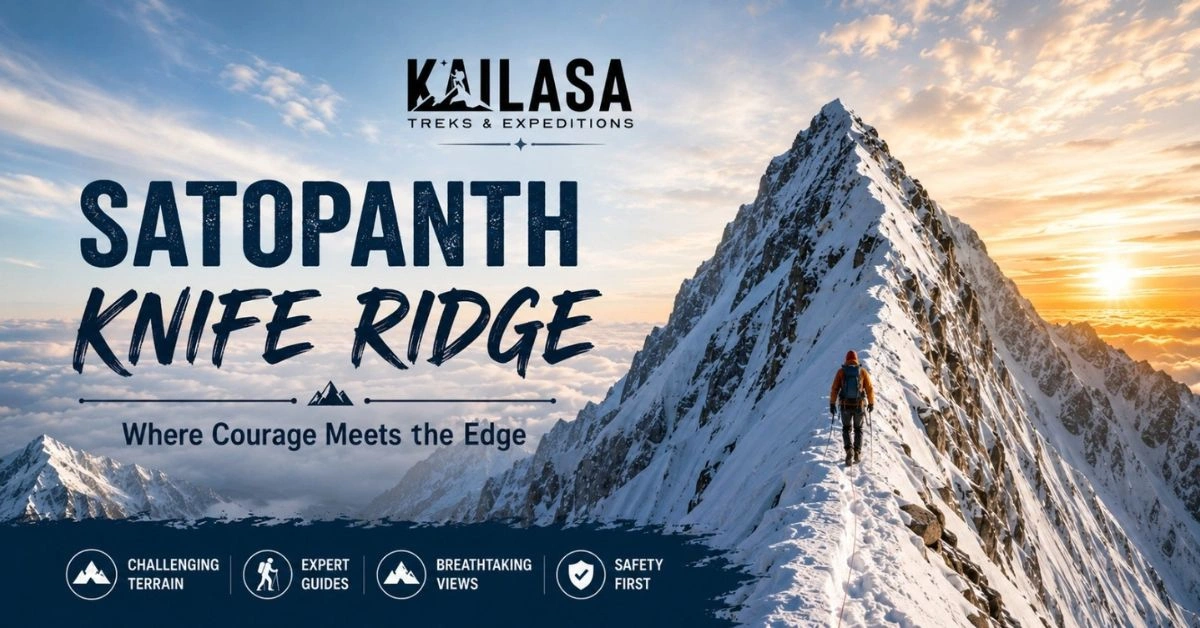
Satopanth Knife Ridge: (7,075m), Route, Best Time to Visit
The Satopanth Knife Ridge is regarded as one of the most technically demanding ridge traverses in the Indian Himalayas. Located in the upper reaches of the Garhwal Himalayas of Uttarakhand, this razor-sharp ridge challenges even seasoned mountaineers with its narrow path, steep drop-offs, unpredictable weather, and high-altitude terrain. Unlike regular trekking trails, the Knife Ridge requires exceptional balance, mental resilience, precise footwork, and sound mountaineering judgment.
For experienced climbers, crossing the Satopanth Knife Ridge is not just another section of a trek—it is a defining moment that tests years of preparation, technical skills, and confidence. Every step demands complete concentration as the ridge narrows dramatically, leaving steep valleys on either side. The breathtaking panorama of snow-covered Himalayan peaks contrasts sharply with the intense focus required to move safely across this exposed section.
At Kailasa Treks & Expeditions, our experienced expedition leaders have guided trekkers and mountaineers through some of the most challenging Himalayan terrains. With certified mountaineering expertise, comprehensive safety protocols, and in-depth knowledge of the Garhwal Himalayas, we prioritize safe and responsible adventure experiences while helping participants achieve their mountaineering goals.
What is Satopanth Knife Ridge?
The Satopanth Knife Ridge is a narrow alpine ridge situated on the approach toward Mt. Satopanth (7,075 m), one of the most respected expedition peaks in Uttarakhand. Positioned above the Gangotri–Badrinath region of the Garhwal Himalayas, the ridge forms a crucial technical section for mountaineering teams attempting higher camps during the expedition.
The term “Knife Ridge” perfectly describes its appearance. The ridge resembles the sharp edge of a knife, often measuring only a few feet wide while dropping hundreds of meters on both sides. Depending on seasonal snowfall and ice accumulation, the width may become even narrower, increasing both exposure and technical difficulty.
Unlike standard Himalayan trekking routes, the Satopanth Knife Ridge often requires:
- Careful rope management
- Excellent balance
- Use of crampons on icy sections
- Ice axe techniques
- Fixed rope traversal
- Team coordination
- Continuous risk assessment
During favorable weather, climbers are rewarded with magnificent views of legendary Himalayan peaks including Chaukhamba, Neelkanth, Balakun, Parvati Peak, and vast glacier systems surrounding the Satopanth region.
This combination of technical terrain and extraordinary Himalayan scenery makes the Satopanth Knife Ridge one of the most memorable sections of the Mt. Satopanth Expedition.
Why is the Satopanth Knife Ridge Considered One of India’s Most Challenging Himalayan Ridges?
1. Extreme Exposure
The defining characteristic of the Knife Ridge is its significant exposure. Climbers move along a narrow crest with steep slopes descending on both sides. Even experienced mountaineers must maintain constant concentration throughout the crossing. Unlike forest trails or rocky trekking paths, there is virtually no margin for error on exposed ridges like Satopanth.
2. High Altitude
The ridge lies at an altitude exceeding 6,000 metres, where oxygen availability is approximately 40–50% lower than at sea level. Reduced oxygen levels can affect physical performance, balance, decision-making, and recovery time. Proper acclimatization is therefore essential before attempting this section.
3. Rapid Weather Changes
The Garhwal Himalayas are known for highly unpredictable mountain weather. Clear skies can quickly transform into snowfall, whiteout conditions, or strong winds. High winds significantly increase the difficulty of crossing the ridge by affecting balance and visibility.
4. Snow and Ice Conditions
Snow bridges, fresh snowfall, hidden crevasses, and hard ice can alter the ridge’s condition through out the climbing season. Expedition leaders continually assess snow stability before allowing climbers to proceed.
5. Mental Endurance
Many climbers describe the psychological challenge as greater than the physical one. Walking across an exposed ridge with steep drops requires calm decision-making, emotional control, and confidence in technical skills. Mental preparation often becomes just as important as physical fitness.
Technical Challenges of the Satopanth Knife Ridge
The Satopanth Knife Ridge is far more than a high-altitude trek—it is a technical alpine section that demands advanced mountaineering skills, physical endurance, and sound decision-making. Climbers attempting this ridge should have prior experience with glacier travel, snow-covered terrain, and the use of technical climbing equipment. Every step requires precision, as the combination of altitude, exposure, and changing weather leaves little room for error.
Narrow Ridge Traverses
One of the most demanding aspects of the Knife Ridge is walking along an extremely narrow crest with steep drops on either side. Maintaining balance while wearing mountaineering boots, carrying a loaded backpack, and navigating snow or loose rock requires exceptional coordination and focus.
Fixed Rope Navigation
Depending on snow and ice conditions, expedition teams may install fixed ropes along exposed sections of the ridge. Climbers must know how to safely use a climbing harness, locking carabiners, ascenders, and safety lanyards to remain securely attached while progressing across technical terrain.
Ice Axe and Self-Arrest Skills
An ice axe is an essential safety tool on the Satopanth Knife Ridge. It helps maintain stability on steep slopes, provides support during traverses, and can be used to perform a self-arrest in the event of a slip. Familiarity with these techniques is crucial before attempting the ridge.
Efficient Crampon Technique
Snow and hard ice are common on the approach, making crampons indispensable. Proper foot placement and controlled movement help prevent slips, loss of balance, or the crampons catching on clothing and uneven terrain. Guides typically brief climbers on correct crampon techniques before entering technical sections.
High-Altitude Decision Making
At elevations above 6,000 metres, reduced oxygen levels can affect concentration, reaction time, and judgment. Climbers must carefully monitor their pace, hydration, and physical condition while making safe decisions in a demanding alpine environment.
Best Time to Visit the Satopanth Knife Ridge
The ideal time to attempt the Satopanth Knife Ridge is during the pre-monsoon (May to June) and post-monsoon (September to early October) seasons. These months generally offer stable weather, better visibility, and comparatively safer snow conditions.
During the monsoon season, heavy rainfall increases the risk of landslides and unstable terrain, while winter brings deep snow, extreme cold, and avalanche hazards that make the route significantly more challenging. Planning your expedition during the recommended climbing windows enhances both safety and the overall Himalayan experience.
Conclusion
The Satopanth Knife Ridge is more than just a challenging mountain route—it’s a true test of technical skill, endurance, confidence, and determination. Its narrow alpine ridge, breathtaking Himalayan landscapes, and demanding terrain make it one of the most respected mountaineering experiences in India. Whether you’re preparing for your first technical expedition or seeking to push your limits in the Garhwal Himalayas, proper planning, expert guidance, and quality equipment are essential for a safe and successful journey.
At Kailasa Treks & Expeditions, we combine years of Himalayan expedition experience with certified guides, safety-focused planning, and responsible mountaineering practices to help you explore some of India’s most spectacular alpine routes. Join our Mt. Satopanth Expedition and experience the thrill of conquering one of the toughest ridge sections in the Himalayas with a team you can trust.
Frequently Asked Questions (FAQs)
A. No. The Satopanth Knife Ridge is recommended only for experienced trekkers and mountaineers with prior exposure to high-altitude expeditions and technical terrain.
A. The ridge is located above 6,000 metres on the route toward Mt. Satopanth (7,075 m) in the Garhwal Himalayas of Uttarakhand.
A. Its narrow ridge, steep drop-offs, high altitude, glacier crossings, unpredictable weather, and technical climbing requirements make it one of the most challenging ridge traverses in the Indian Himalayas.
A. Yes. Climbers should use essential mountaineering equipment such as crampons, an ice axe, helmet, climbing harness, ropes, and safety gear while crossing the ridge.
A. The best seasons are May to June and September to early October, when weather conditions are generally more stable and suitable for mountaineering.

All Categories
Recent Posts
10 Best Winter Treks in India

Winter Spiti Expedition with Ice Climbing: Complete Guide to Spiti in Winter
Nanda Devi East Expedition: The Ultimate Challenge for Experienced Mountaineers