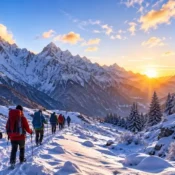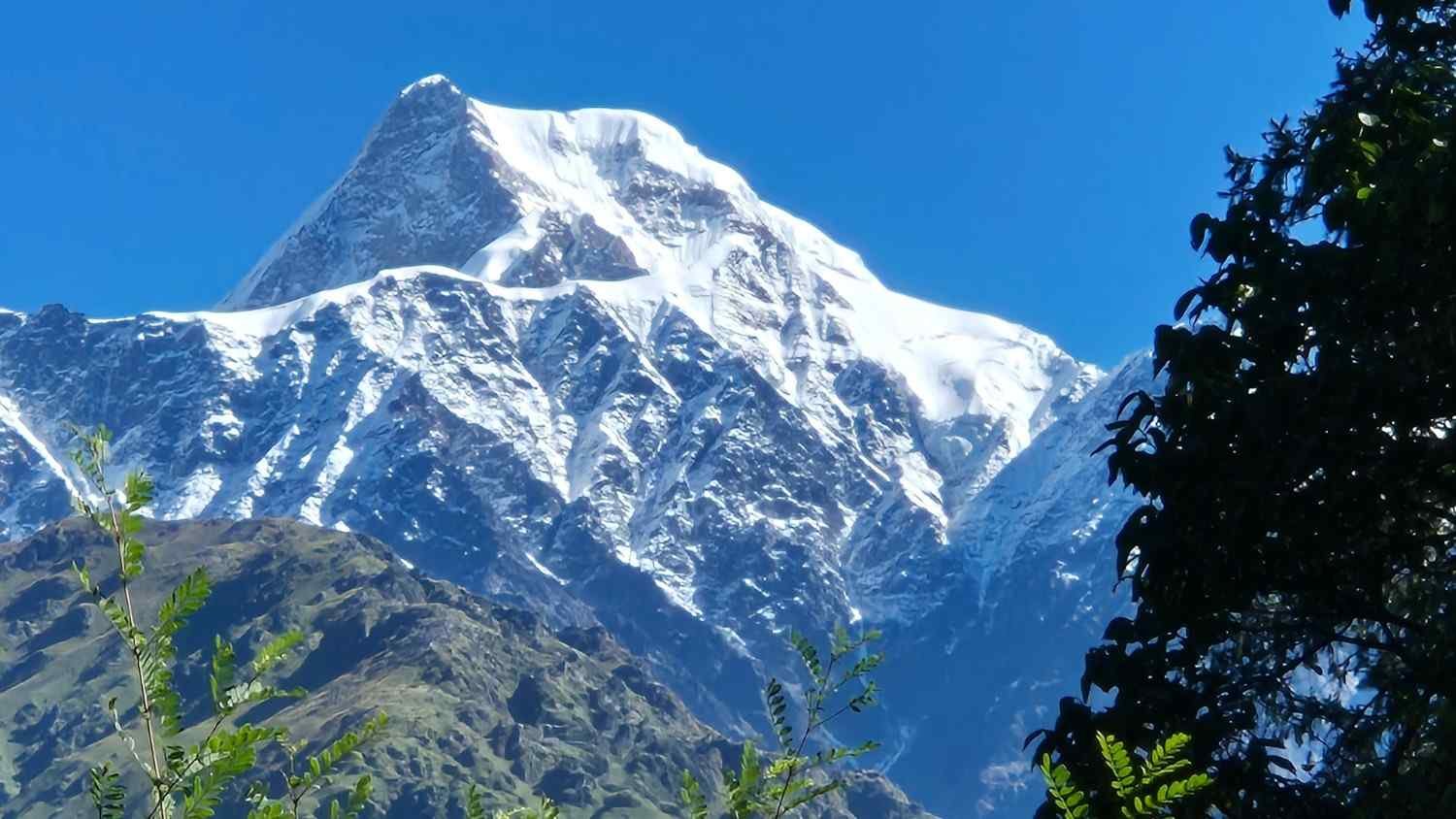
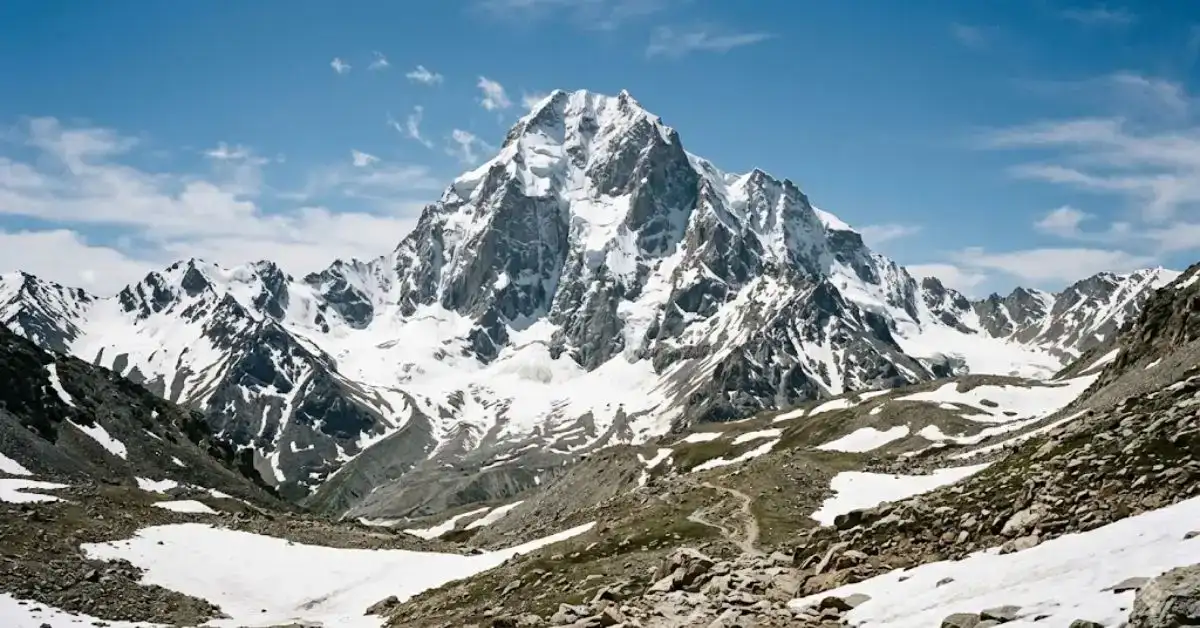
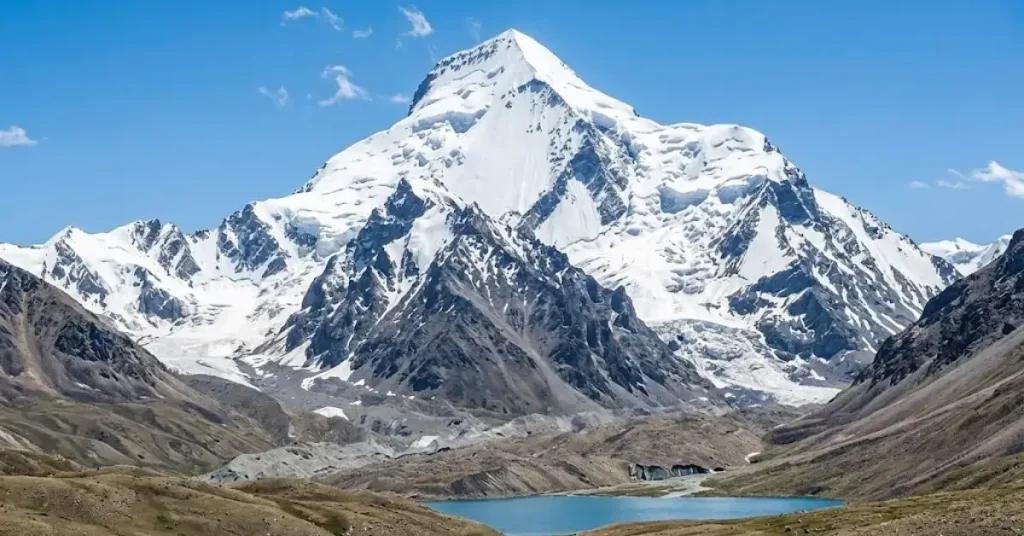
Nun mountain is located in the Suru Valley, Kargil, Ladakh, in the Zanskar range, at 7135 meters. Most climbers who visit it are also among the least underrated expeditions in India. No crowds. Only you find people who like expeditions and underrated places: pure ice, elevation, and a high peak.
In the process of wondering whether this is the right mountain for the expedition in 2026, should you have been searching for the Mt Nun Expedition, this guide covers all the details: the real costs, a daily schedule, the real reason why Mount Nun is so hard, and some of the things that you cannot find in other places.
A Quick Overview of Mount Nun
Mount Nun is located in the Nun Kun massif, and has the same range as its twin Kun (7,077 m). The two peaks are known locally and among climbers as the Nun Kun massif. The massif is visited above the Suru Valley, about 270 km west of Srinagar, and accessible via Leh.
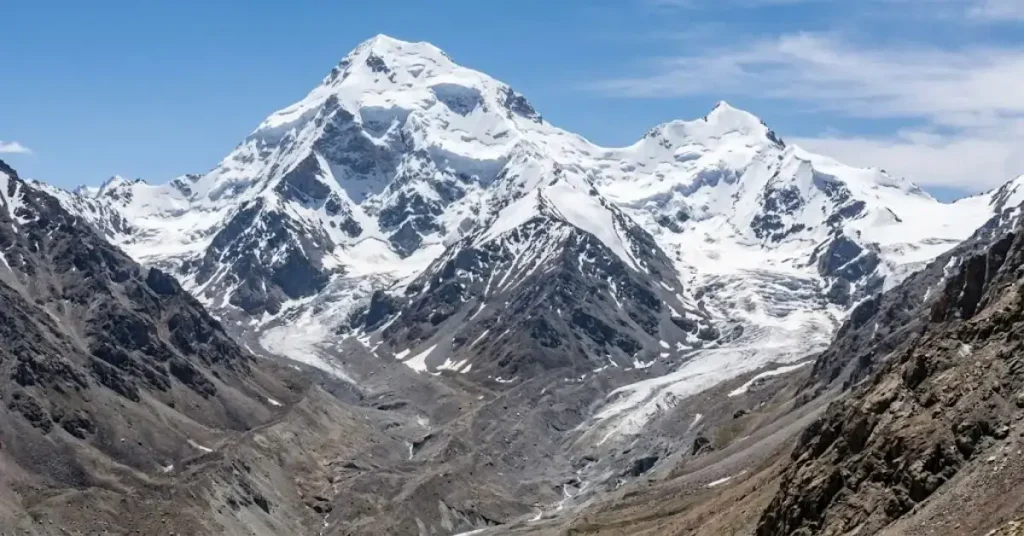
The peak averages fewer than 30 expeditions per year. Compared to 6000ers, which receive hundreds of permits. July through August is the best time for the Mount Nun Expedition. Best season is July and August. The window is brief, suggesting that permits are issued more quickly than you might expect during a non-commercial peak. Reserve a place with us at Kailasa Treks and Expeditions before April.
Mt Nun Expedition Difficulty
Mt. Nun is a challenging technical terrain. It is not just a walking peak. It requires high-altitude previous mountaineering experience, preferably above 6,000m.
The Main Challenges:–
- Altitude:- Summit day goes beyond 7,000 meters. It is not an option to acclimatize; it is the entire plan. The majority of teams take 20-23 days in this expedition.
- Crevasse fields:- The high camp method traverses vastly crevassed glaciers. Fixed ropes are compulsory.
- Weather windows:- The Zanskar range is located between the south monsoon and the north cold westerly. July and August are the best periods, although the best does not mean easy.
- Summit ridge:- The last blast has steep snow and ice with gradients of 60 to 75 degrees.
- Fitness baseline:- Before attempting this, anyone joining a Mt. Nun expedition must have at least climbed one 6,000 m peak. Mountaineering courses like BMC and AMC.
Read Also:- Mt Nun vs Mt Kun
Mt Nun Expedition: 2026 Cost Breakdown
The Mount Nun expedition with Kailasa Treks and Expeditions is priced at INR 2,15,000 + 5% GST per person, totaling INR 2,25,750. That price is all-in for everything on the mountain. Here is what it covers:-
Included in the package:–
- Expedition permit and any other permit.
- All transport from Leh to Road and back.
- Base camp setup: kitchen tent, dining tent, toilet tent, sleeping tents.
- Experienced high-altitude Kailasa Treks and Expeditions Leader, Sherpa and Support Staff.
- Cook and full catering at Base Camp.
- High camp tents, fixed ropes, and snow anchors.
- Medical oxygen for emergency use at the Base Camp.
- All camp equipment up to high camps.
Not included:–
- Flights to Leh or from Leh.
- Hotel Meal and Transport Meals.
- Travel insurance with high-altitude evacuation cover.
- Personal Porter offloading and sherpa.
- Personal expenses and tips.
- Any extra nights in Leh due to weather or delays.
For group bookings of 6 or more, contact Kailasa Treks and Expeditions directly for a customized quote.
Mt Nun Expedition Itinerary (2026)
This is the normal schedule we follow in Kailasa Treks and Expeditions. Rest days may be added due to weather or acclimatization.
Day 1 — Arrive in Leh (3,500M)
Reach Leh, the entrance of Ladakh. Move to accommodation and rest to start acclimatizing to the high altitude.
Day 2 – Leh (3,500 m): rest and acclimatization
Full rest day. Visit local markets and monasteries; light walking; gear check; evening discussion of the expedition plan, safety and mountain ethics.
Day 3 — Leh to Khardhung Tso and back to Leh (5,700M)
Leh to Khardung Tso, a high-altitude lake near the iconic Khardung La pass. This serves as a key acclimatization excursion, pushing the body to adapt to extreme altitude.
Day 4 — Leh to Tangol (3,700M)
Suru River to Tangol village – the point of origin of the mountaineering expedition. Orchards of apricot, terraced fields, and rocks. Evening walk for short acclimatization.
Day 5 — Rest Day at Tangol (3,700M)
Acclimatization and training of skills- basic mountaineering skills, equipment handling and knot tying, overnight in camp.
Day 6 — Tangol to Base Camp (4,600M)
A mountaineering expedition begins. Cross a bridge across a river, climb moraines and rocky ground, and squeeze through loose rocks on steep waterfalls. Base Camp is located above the waterfall.
Day 7 – Base Camp (4,600M) rest and acclimatization
Conventional puja ritual for blessings. The rest of the day involves acclimatization, equipment distribution, and technical training of the local snow and ice.
Days 8–18 — Expedition Phase
Acclimatization rotations between camps to high altitude climbing:
- Camp 1 (5,500M):- Rocky and steep, with parts of ice walls with fixed ropes; arrived within 5-6 hours.
- Camp 2 (6,100M):- 60-70 degree slopes, continuously front-pointing crampons, narrow ridges camp.
- Camp 3 / Summit Camp (6,400M):- Smoother snow dunes towards a broad snow launch takeoff pad.
- Summit Push (7,135M):- Starts 11 PM-midnight on the west ridge; ice is steep, and the top has a boulder zone; round trip 14-16 hours.
- Base Camp to Descent:- Strenuous and long; 8-10 hours.
Day 19 – Base Camp to Tangol and Drive to Leh
Clear Base Camp, walk down to Tangol (~4 hrs), and then drive back to Leh.
Day 20 — Reserve Day
Buffer day in case of weather or health problems.
Day 21 — Reserve Day
Second day of buffer when necessary.
Day 22 — Reserve Day
Third day of buffer when necessary.
Day 23 – Departure Day
Expedition Ends.
Final Words
Kailasa Treks and Expedition has been conducting Himalayan expeditions from this area for many years. Our support teams are familiar with the Nun Kun massif, which is at high altitude. We do not outsource critical logistics. On each expedition, we have an experienced Kailasa Treks and Expeditions leader with you on the mountain, not sitting back in Leh waiting to be called.
You need a proper high-altitude kit. Double boots, a down suit, a four-season sleeping bag rated to minus 20 at minimum, and glacier travel equipment. Kailasa Treks and Expeditions provides shared equipment like fixed ropes, snow anchors, and base camp tents. Personal technical gear is included.
Answers to Your Queries
A. Yes, without exception. The authorities require evidence of prior mountaineering experience, and Kailasa Treks and Expeditions will request your mountaineering resume before making a booking. The minimum is 1 or 26,000 m peaks. This is not the first expedition to be undertaken, especially when you have not taken any Himalayan treks.
A. In history, approximately 70-80% of expeditions reach the top. The primary one is weather, and then acclimatization to altitude. A well-prepared team with a good weather window has significantly higher chances than average.
A. Mount Nun is a difficult goal with objective risks such as crevasses, avalanche terrain, and high-altitude weather. It is not more harmful than other similar peaks; however, it is remote. It is taking longer to rescue than in well-commercialized mountain areas like Nepal. This necessitates an experienced guide and adequate insurance.
A. Register directly on the site with your mountaineering background and desired departure date. We verify availability, examine your experience, and discuss logistics and costs. The majority of 2026 teams are full from January to April, making initial outreach worthwhile.
A. Mount Nun has nothing to do with the movies. It is named after the Nun Kun massif in Zanskar, which was named centuries before any film franchise existed. The mountain does nothing to nuns. It does plenty for climbers, however.